WAL (Write Ahead Log)
The Write Ahead Log (WAL) is a data logging mechanism used in databases, storage systems, and other applications to ensure durability and consistency in the event of a system crash or failure. It works by recording changes to a log before applying those changes to the main dataset. This guarantees that all modifications can be recovered and reapplied after a crash.
Key Characteristics of WAL
-
Sequential Logging:
- Changes are written to the log sequentially, which is faster than random writes to the main dataset.
- The WAL is typically stored on disk to ensure persistence.
-
Crash Recovery:
- After a crash, the WAL can be replayed to restore the system to its last consistent state.
- It prevents data loss by ensuring that uncommitted changes are logged before being applied.
-
Atomicity and Consistency:
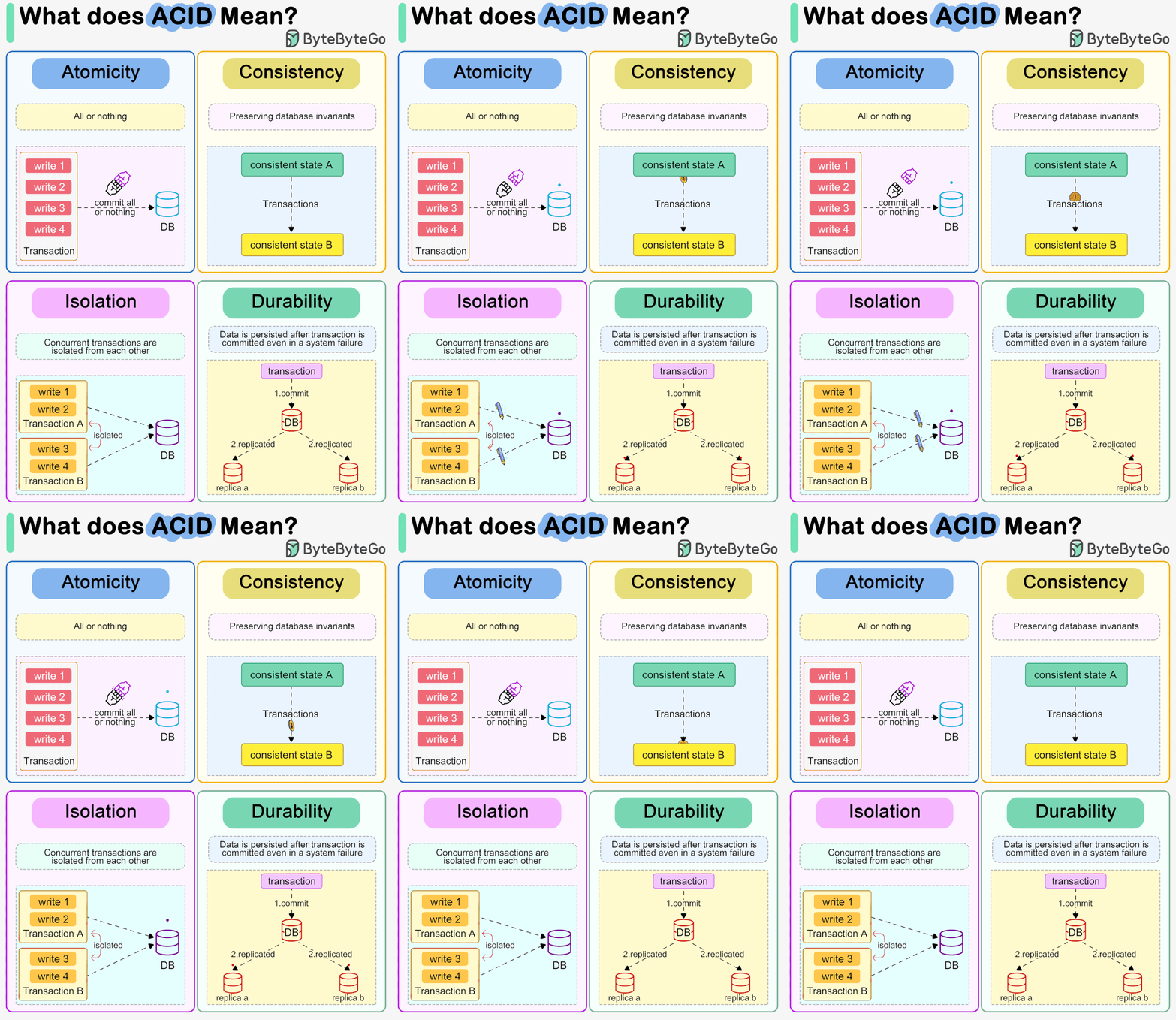
- The WAL ensures that operations are atomic (all or nothing) and consistent, adhering to ACID principles.
Expand to show ACID visualized schema
-
Durability Guarantee:
- Changes logged in the WAL are persistent even if the system fails before they are applied to the main data.
How WAL Works
-
Log First:
- When a transaction or write operation occurs, the changes are written to the WAL first.
-
Apply Changes:
- After the changes are safely logged, they are applied to the main database or data store.
-
Checkpointing:
- Periodically, the system flushes the accumulated changes from the WAL to the main dataset and marks those changes as committed in the WAL.
-
Truncation:
- Older parts of the WAL that are no longer needed (because their changes are safely written to the dataset) are truncated to save space.
Applications of WAL
-
Databases (e.g., PostgreSQL, SQLite):
- Ensures transaction durability and helps recover the database to its last consistent state.
-
Distributed Logging Systems (e.g., Loki, Kafka):
- Records logs or data changes sequentially to ensure recoverability and consistency.
-
File Systems (e.g., EXT4):
- Tracks file system metadata changes to prevent corruption during sudden power loss or crashes.
Advantages of WAL
- Faster writes due to sequential logging.
- Reliable recovery from crashes.
- Guarantees data consistency and durability.
Disadvantages of WAL
- Additional disk space for the log.
- Slight overhead from maintaining the log.
Example
Insert a Row into a Table
PostgreSQL
WAL
WAL Record:
    LSN: 0/163B6F8
    Transaction ID: 1234
    Operation: INSERT
    Table: users
    Data: (1, 'Alice', 'alice@example.com')